Welcome to Call Me Victorian! This site has my free vintage inspired printables, clip-art, images, and digital scrapbook ephemera. Are you truly a Victorian Lady at heart? Glimpse into a bygone era and add some Victorian style to your life.
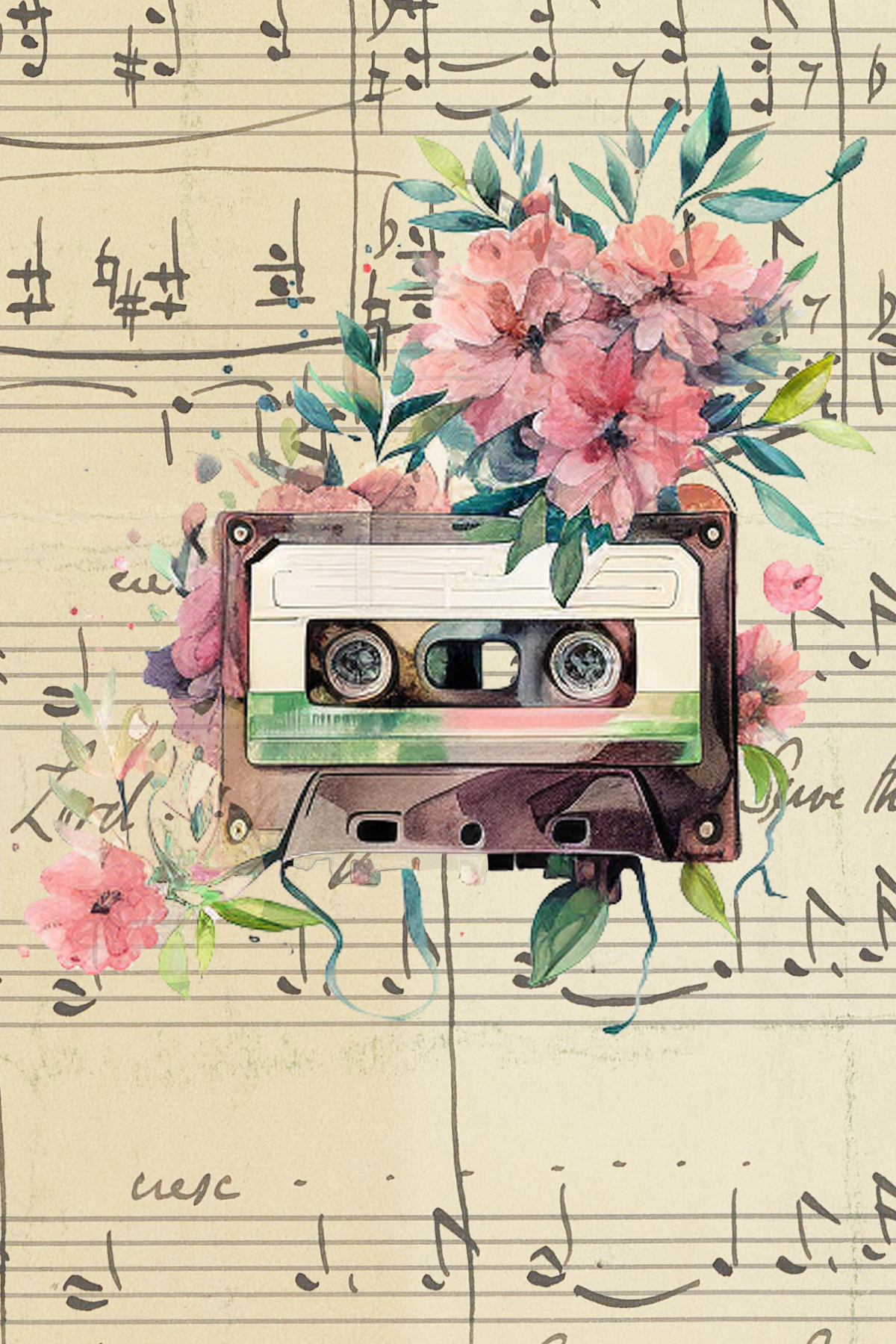
If you are feeling 1980s nostalgia, you can download and print this free printable wildflower cassette tape digital art. The background is handwritten sheet music from the 1800’s, what a juxtaposition!
Right-click to save the image.
Cassette tapes were first introduced in the 1960s and became widely used for music in the 1970s. They remained popular until the late 1990s, when they were largely replaced by digital formats such as CDs and MP3s. However, some people continue to use cassette tapes for music even today.
The 1980s were a decade known for its bold fashion, memorable pop culture moments, and iconic music. Many people who grew up in the 1980s look back on this period with nostalgia, fondly remembering the music, movies, and other aspects of the era. Some of the key characteristics of 1980s nostalgia include a love for the music of the time, a fondness for the fashions and styles of the era, and a sense of longing for the simpler, more carefree times that are often associated with the 1980s.
There are many different types of art that may be of interest to music lovers. Some possibilities might include:
Music-themed artwork, such as paintings or drawings of musicians or musical instruments
Album cover art or concert posters
Sculptures or installations that incorporate music or sound in some way
Photography related to music, such as portraits of musicians or images taken at concerts
Music-inspired fashion or design, such as clothing or accessories featuring band logos or musical motifs
Ultimately, the type of art that is most appealing to a music lover will depend on their personal preferences and interests.
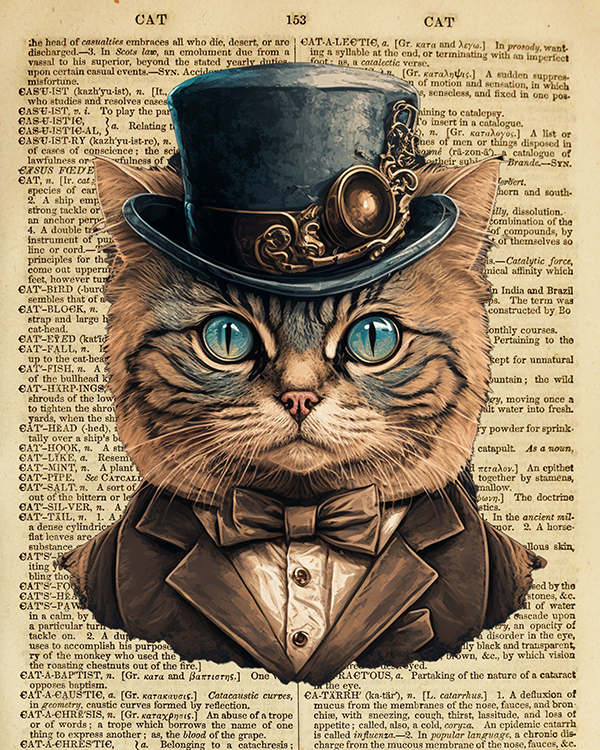
This gentleman cat can be downloaded and printed out to hang on your vintage art gallery wall. A Steampunk cat wearing a top hat and suit with a bow tie would be a unique and interesting creature! Steampunk is a subgenre of science fiction and speculative fiction that combines elements of Victorian-era technology and aesthetics with futuristic technology. The concept of a cat dressed in steampunk clothing, complete with a top hat and suit with a bow tie, could be incorporated into a story, artwork, or even a costume. It might be portrayed as a sophisticated and stylish feline with a love for all things mechanical and a fondness for Victorian fashion. Alternatively, the cat could be portrayed as a mischievous and clever character, using its steampunk attire to carry out elaborate schemes and adventures.
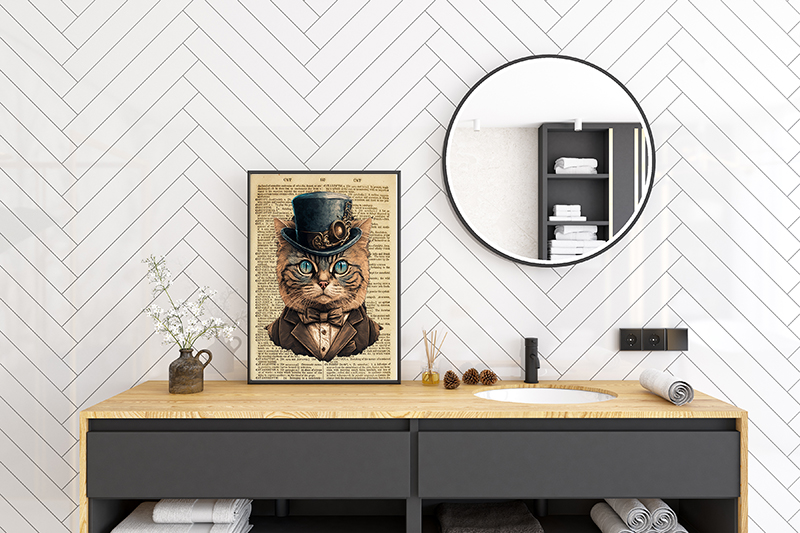
This beautiful blue eyed feline looks great in a frame. This was made on a genuine old page of a dictionary from the CAT section so all the entries match the subject. If you have a cat bedroom or special area of the house where your kitties play this is a great piece of art decor for your room. I have a cat themed bathroom where I have this hanging along with a lot of other dressed up cats.
Anthropomorphic animals, or animals that have human-like characteristics or behaviors, have long been a popular subject in literature, film, and other forms of media. There are a few different reasons why humans may enjoy these types of characters.
One reason is that anthropomorphic animals allow people to explore and understand complex emotions and relationships in a simpler, more relatable way. By giving animals human-like qualities, it becomes easier for people to identify with and understand their experiences. This can be particularly appealing to children, who may not yet have the emotional or cognitive skills to fully grasp more abstract concepts.
Another reason is that anthropomorphic animals can be used to comment on or satirize human society and behavior. By portraying animals as behaving in ways that are similar to humans, it becomes possible to explore and critique human society in a way that is both entertaining and thought-provoking.
Finally, anthropomorphic animals can simply be enjoyable to watch or read about. They can be cute, funny, or charismatic, and their human-like qualities can make them more relatable and engaging to audiences.
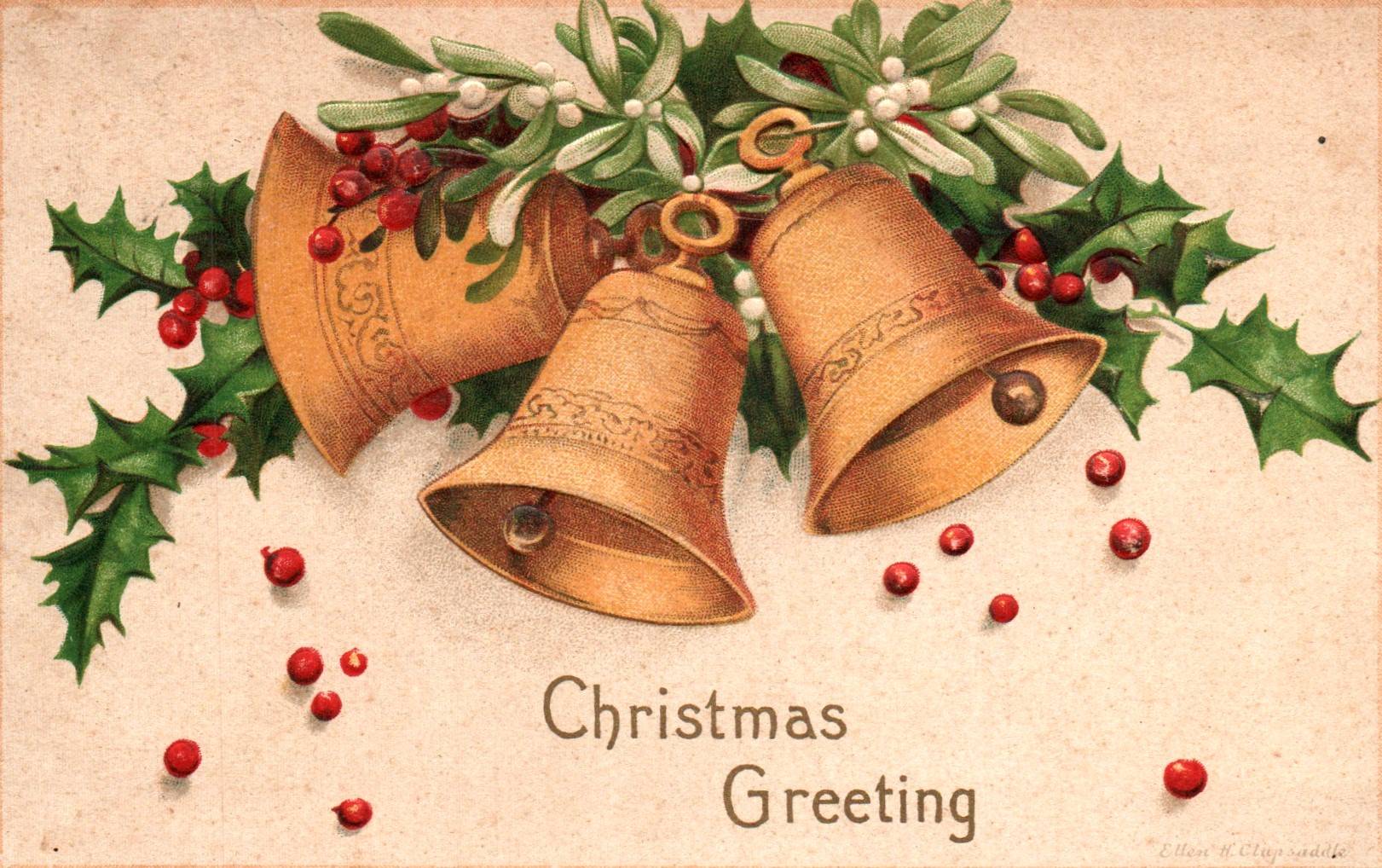
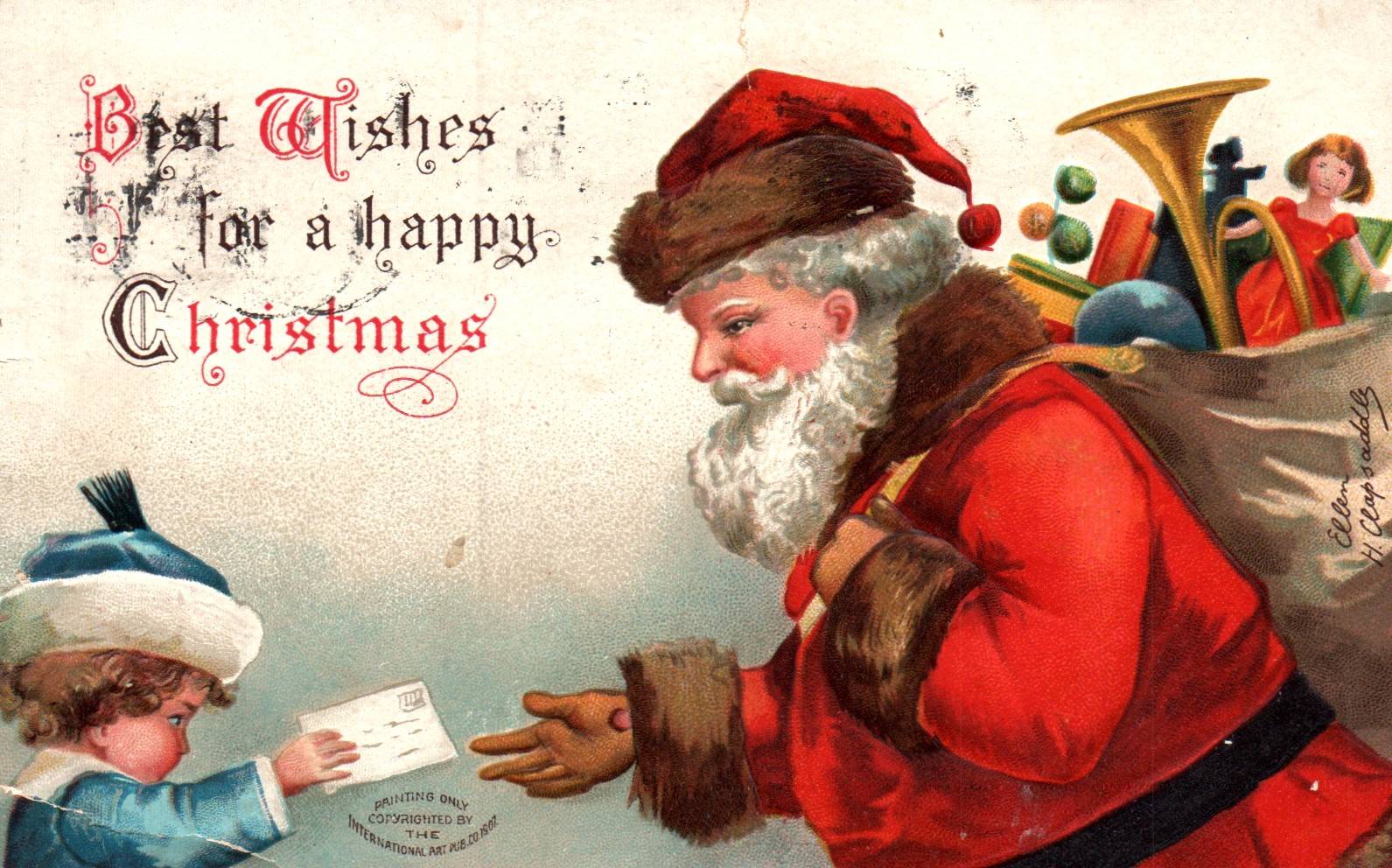
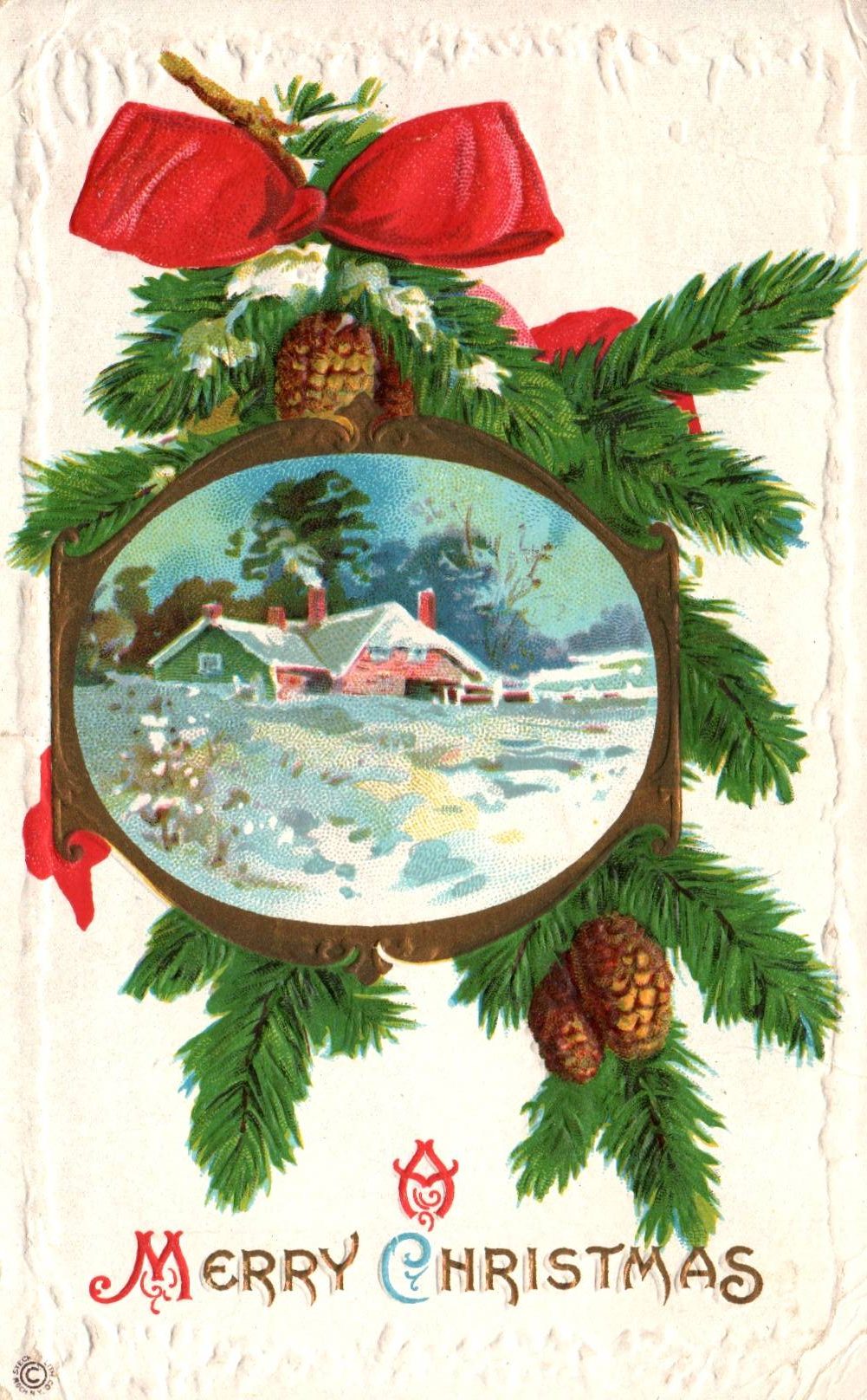
This post features downloads of free vintage Christmas Images from the early 1900’s.
Vintage Christmas cards and postcards have traditional Christmas themes such as Santa Claus, Angels, Christmas trees, and reindeer. They may also depict holiday activities such as caroling, gift giving, and decorating the tree. In terms of style, vintage Christmas cards and postcards can range from simple and understated to more elaborate and ornate. Some vintage Christmas cards and postcards feature intricate designs and intricate artwork, while others may be more basic in design. Many vintage Christmas cards and postcards also feature holiday greetings and messages, such as “Merry Christmas” or “Season’s Greetings.”
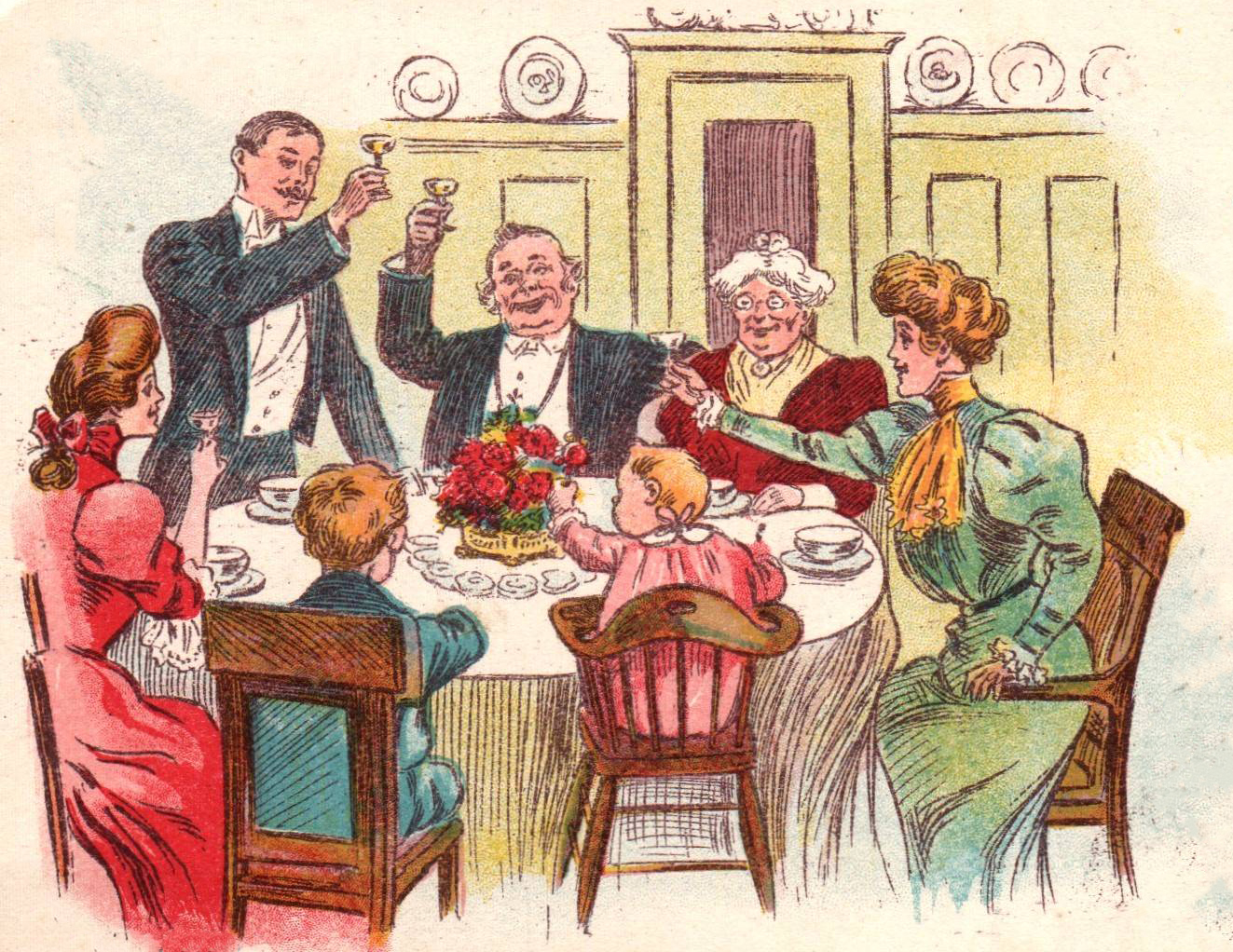
It is not uncommon for vintage Christmas cards and postcards from the early 1900s to depict scenes of families gathering around the Christmas table to toast and celebrate the holiday. These images often show families dressed in their finest clothing, enjoying a festive meal together and raising a toast to the holiday season. Christmas cards and postcards are a great way to get a sense of what Christmas celebrations were like in the early 1900s and can be a fun and nostalgic way to celebrate the holiday season.
Image Gallery
Traditional Victorian images, Santa Claus and Pine Cone Spruce Border
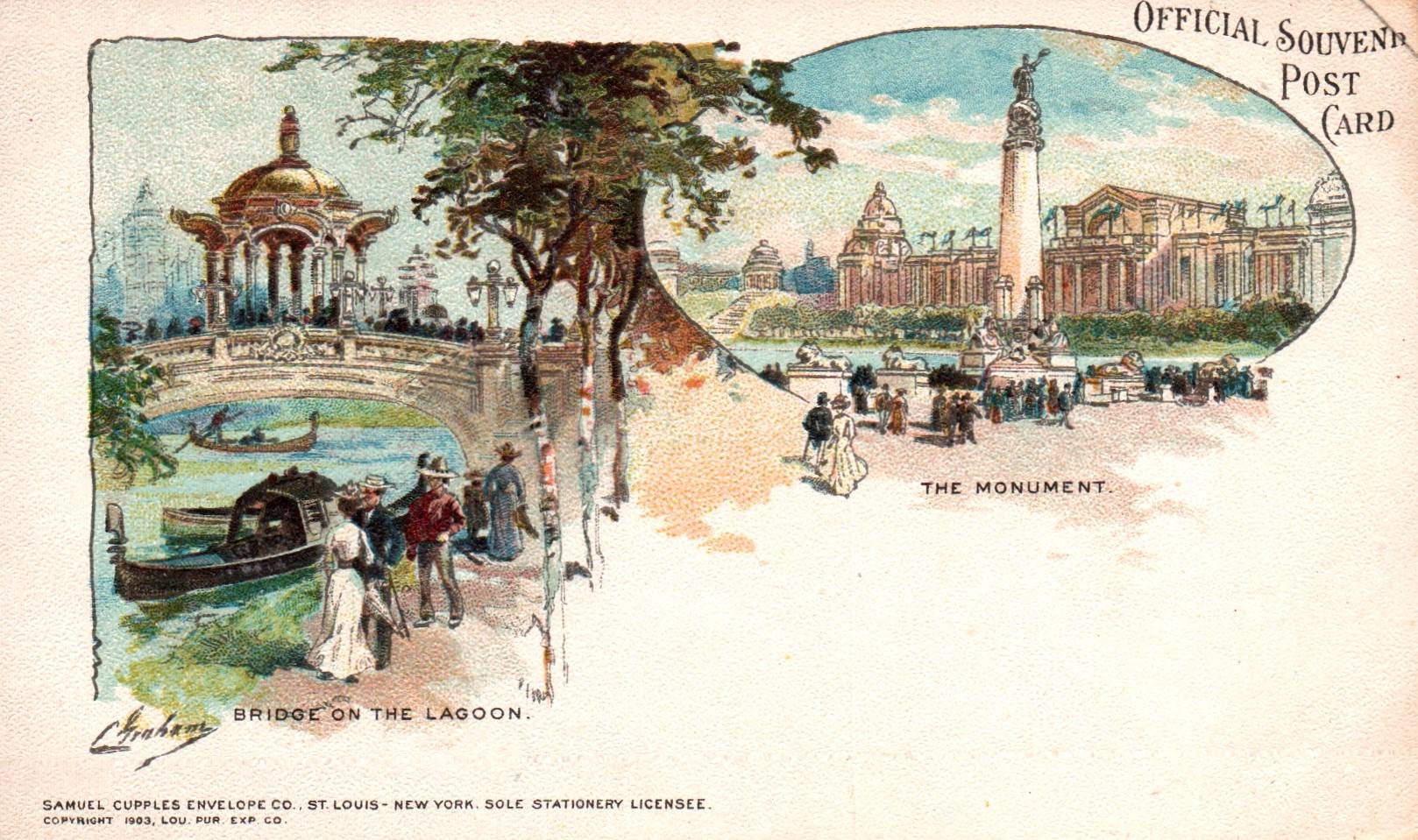
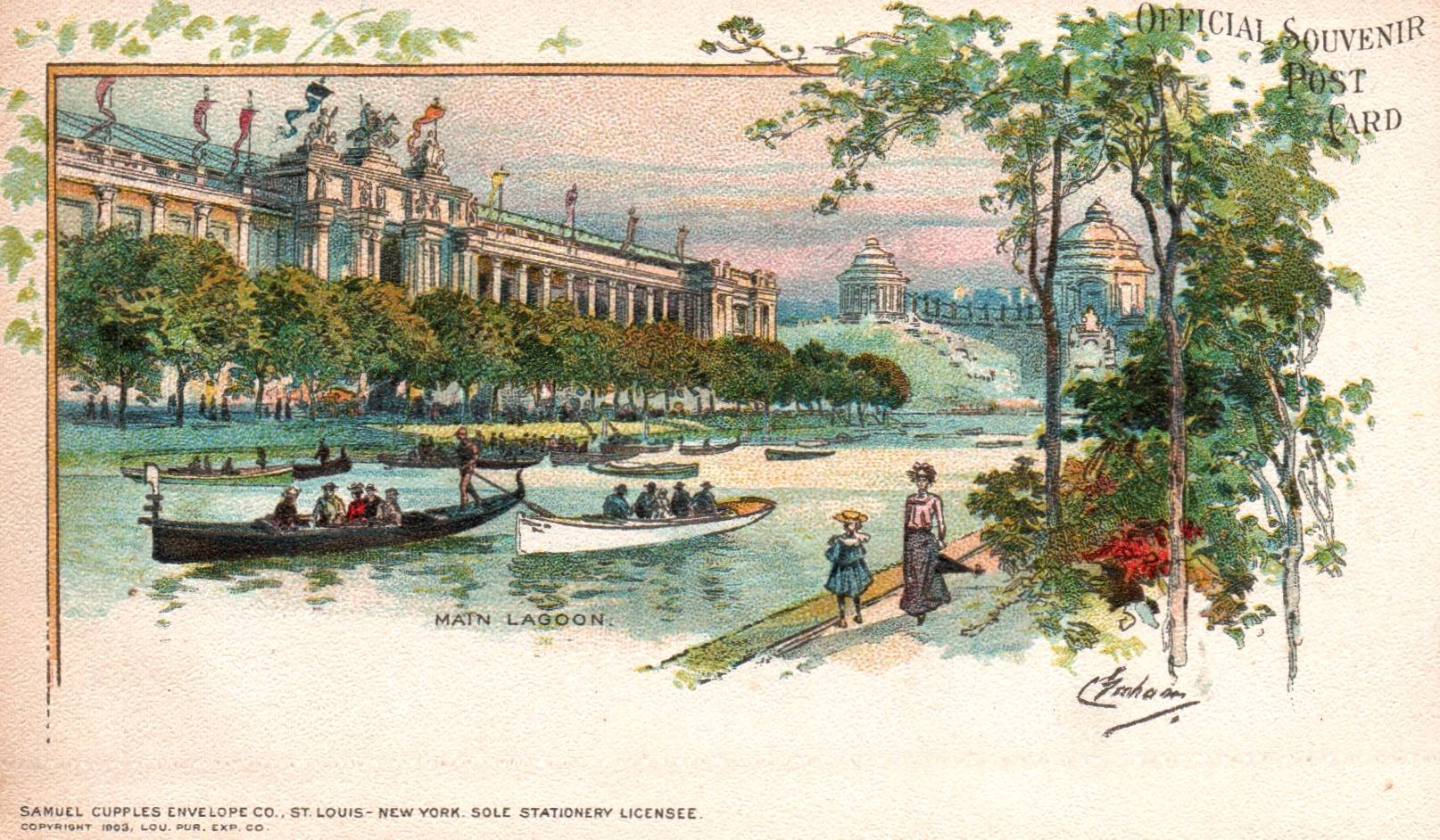
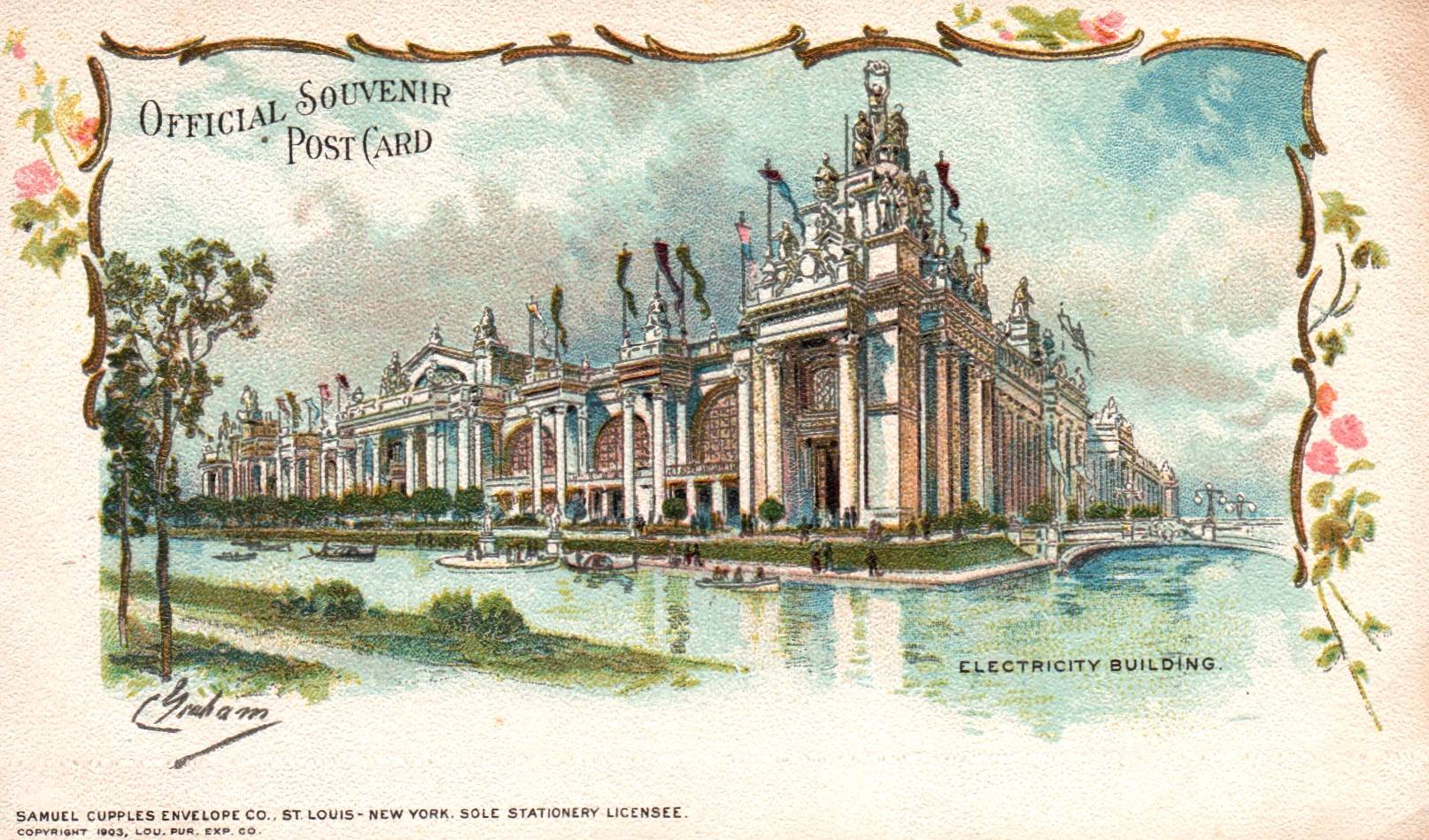
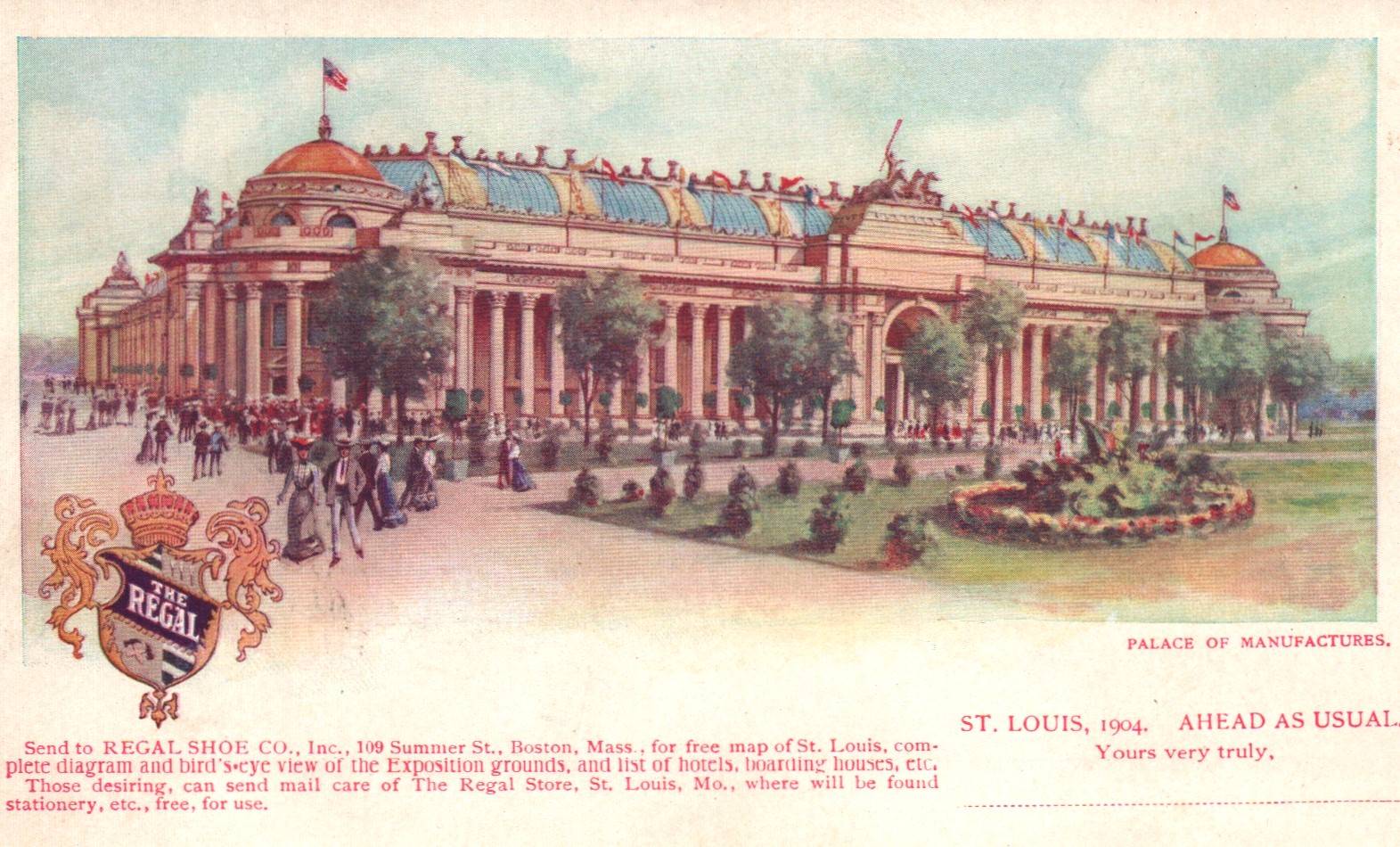
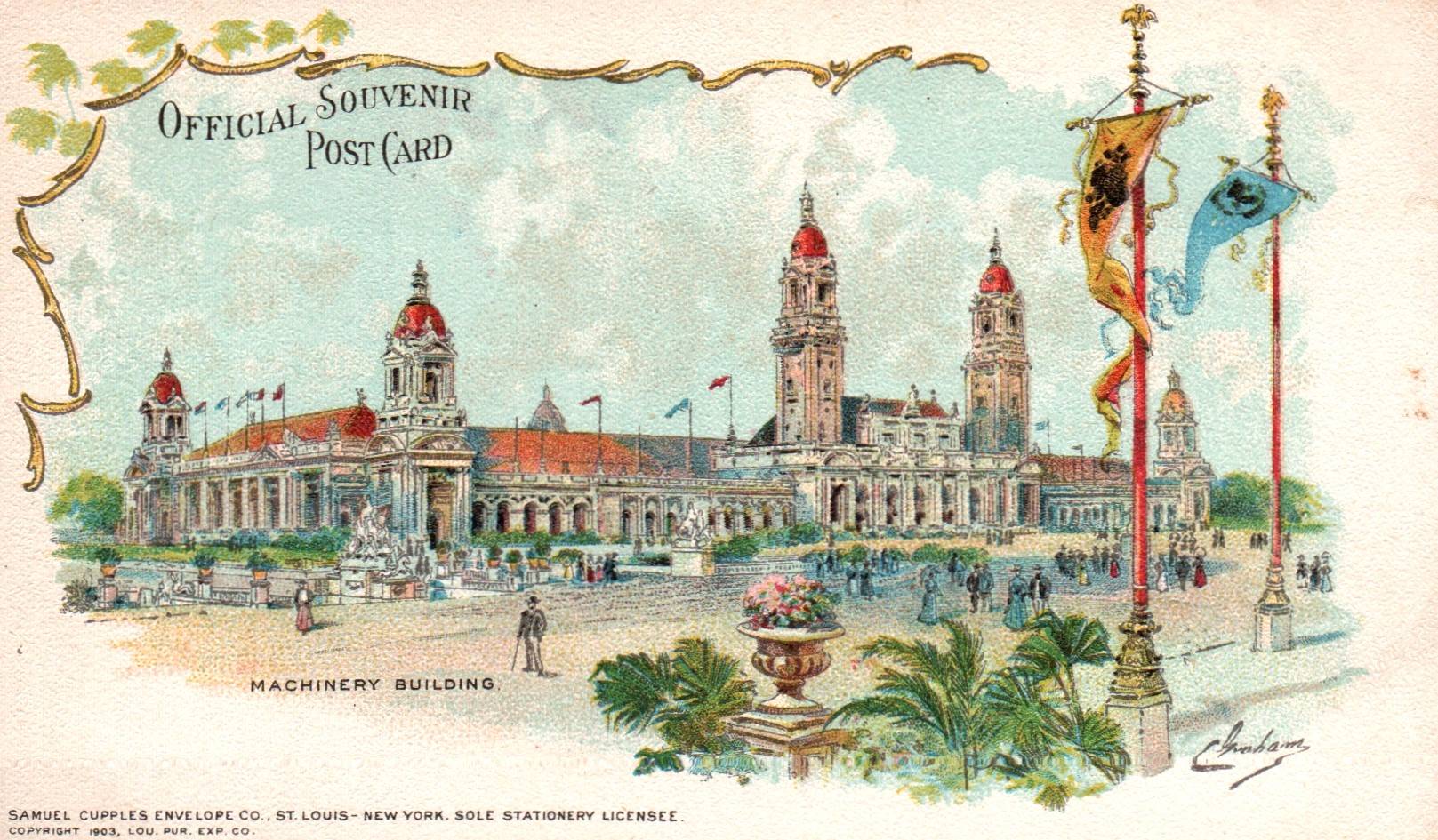
The 1904 St. Louis World’s Fair, also known as the Louisiana Purchase Exposition, was held in St. Louis, Missouri, from April 30 to December 1, 1904. It was the largest world’s fair to date; attracting nearly 19 million visitors. It is distinguished for being the first world’s fair with an admission price of only one dollar.
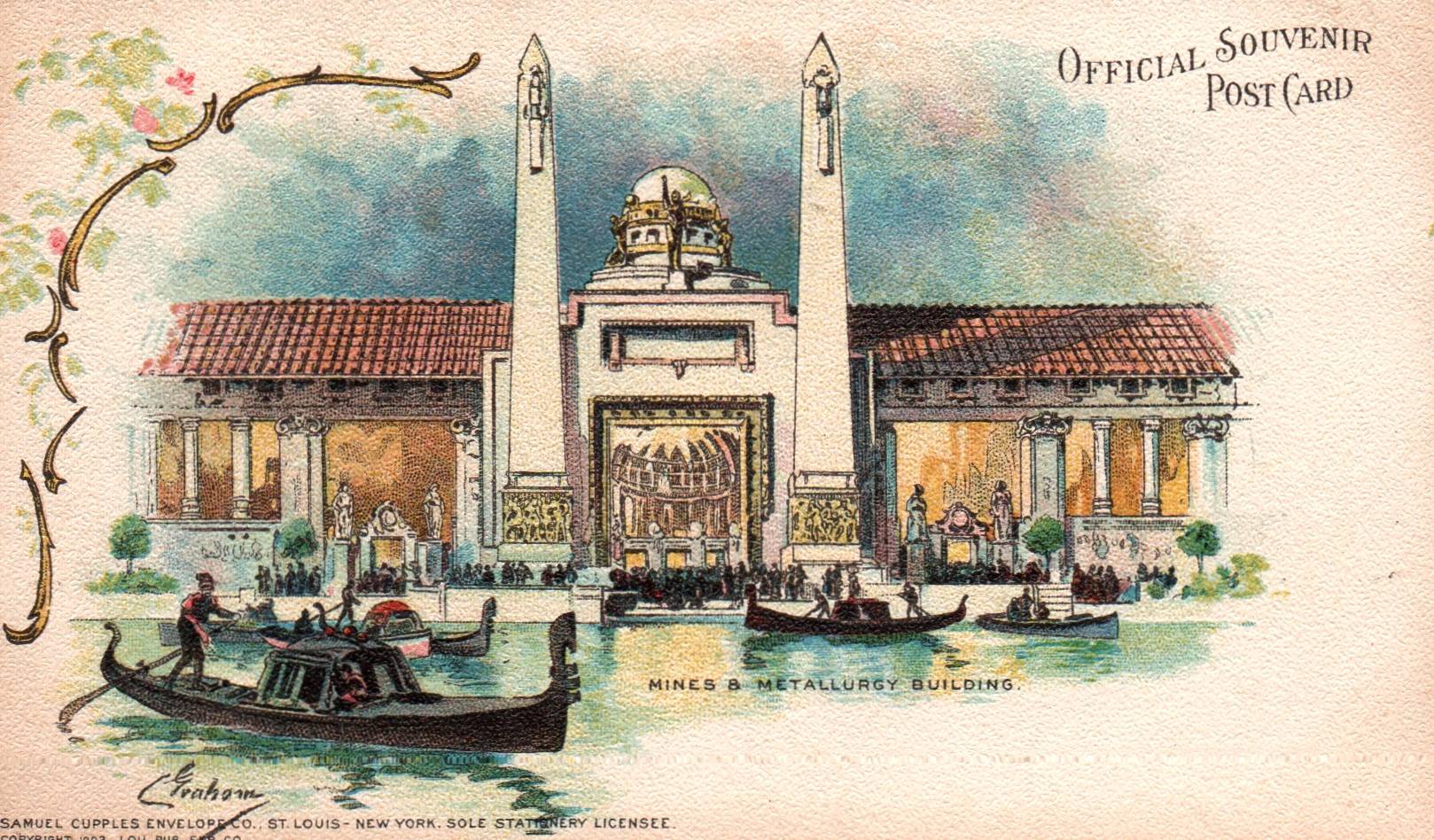
The fair celebrated the 100th anniversary of the 1803 Louisiana Purchase, and Main Street at the fair became known as the Avenue of Nations, lined with flags of the various nations involved in the purchase. The fair commemorated the event with a 272-foot (83 m) tall signal tower, which displayed colored lights that could be seen for miles. Here are some official vintage postcards from the Fair.
Meet Me in St. Louis
One of my favorite classic films is Meet Me in St. Louis starring Judy Garland. The characters in the movie visit the fair at the end.
The 1904 St. Louis World’s Fair was held to commemorate the 100th anniversary of the Louisiana Purchase.
The 1904 St. Louis World’s Fair was held to commemorate the 100th anniversary of the Louisiana Purchase. The event was an enormous undertaking, with over 60 nations and 43 states represented. It was also the first world’s fair to be held in the United States.
The fair was held in Forest Park, which had been significantly expanded and improved for the occasion. New buildings included the Palace of Fine Arts (now the Saint Louis Art Museum) and the Illustration Building. The grounds also featured a travelogue of the United States, with miniature replicas of various landmarks.
The fair was a massive undertaking, and it was not without its challenges. There were concerns about crime, as the city was not used to hosting such a large number of visitors. There were also concerns about sanitation, as the crowded conditions could lead to the spread of disease.
Despite these challenges, the fair was a huge success. Over 20 million people visited the fair between April and December 1904. It was a showcase of American progress and a celebration of the country’s cultures. The fair helped to boost St. Louis’s economy and cement its reputation as a major city.
2. The fair was held in Forest Park and featured over 1,500 exhibit buildings.
In 1904, the World’s Fair was held in St. Louis, Missouri to commemorate the centennial of the Louisiana Purchase. The fair was held in Forest Park and featured over 1,500 exhibit buildings. The Louisiana Purchase Exposition was the biggest World’s Fair up to that time. It attracted more than 20 million visitors from around the world.
The fairgrounds were designed to be a beautiful, naturalistic setting. The main fairgrounds were in Washington Park, with the main entrance at Lindell Boulevard and DeBaliviere Avenue. There were also exhibits in Forest Park, including the Flight Cage, where birds were displayed.
The Louisiana Purchase Exposition was a showcase for the latest in technology and innovation. One of the most popular attractions was the 1904 World’s Fair Ferris wheel. It was the biggest Ferris wheel ever built, and it carried 2,160 passengers at a time. Another popular attraction was the “Thunderbolt”, a wooden roller coaster.
The fair also featured many cultural exhibits. There was an exhibit of Native American art and culture, as well as exhibits from many different countries. The Louisiana Purchase Exposition was a celebration of the diversity of the United States.
The fair was held for six months, from April 30 to December 1, 1904. It was a great success, and it was the last World’s Fair to be held in the United States for more than 20 years.
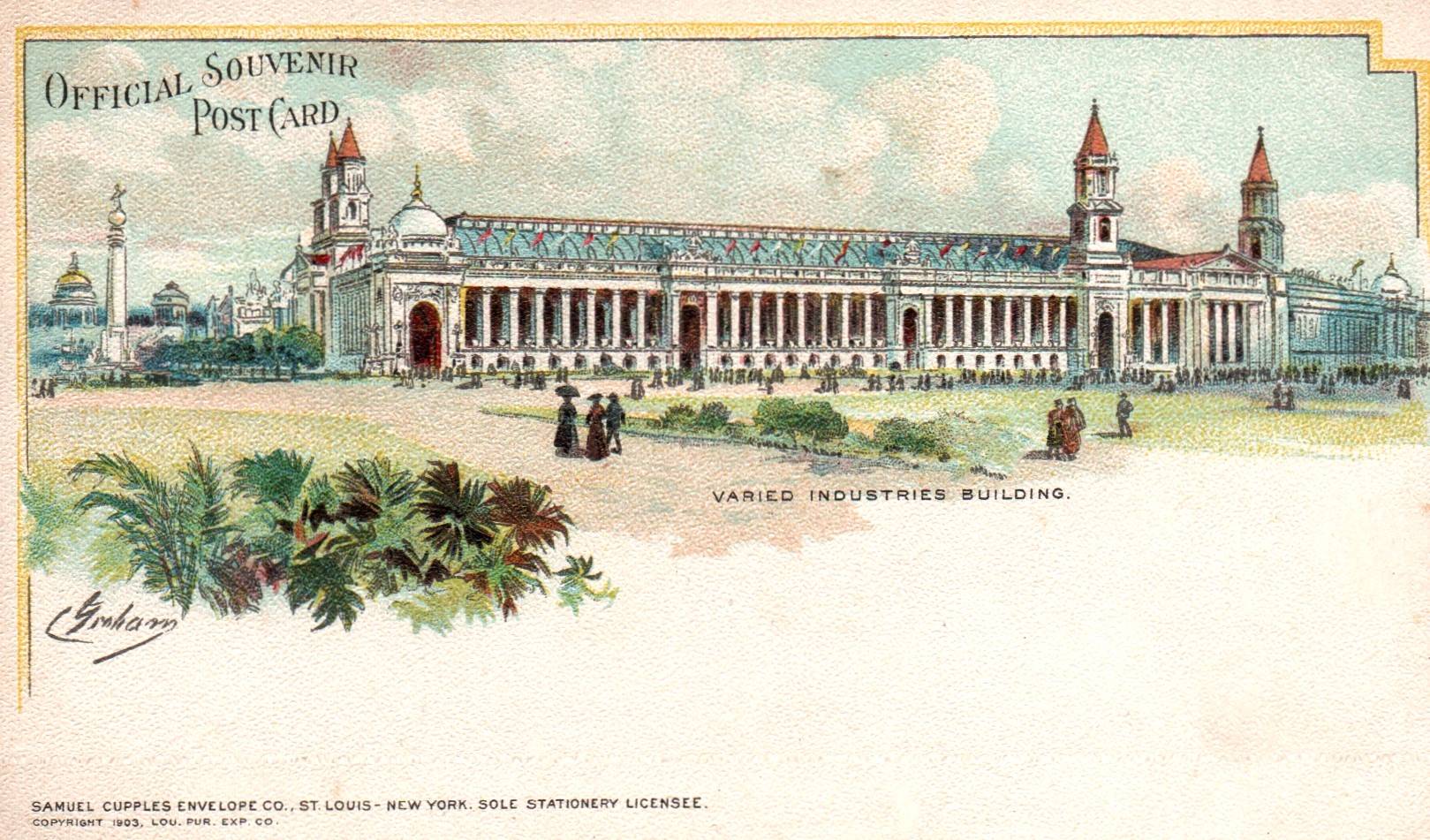
3. One of the most popular attractions at the fair was the Louisiana Purchase Exposition Palace of Varied Industries, which showcased products from all over the world.
The Louisiana Purchase Exposition Palace of Varied Industries was one of the most popular attractions at the 1904 St. Louis World’s Fair. The palace showcased products from all over the world, including exotic items from the newly acquired Louisiana Purchase territories. Visitors to the palace could see everything from Native American crafts to African masks to French furniture.
The palace was a massive structure, covering nearly two hectares of ground. It was designed to showcase the Industrial Arts of the World, and featured a wide variety of exhibitors. The United States government was one of the largest exhibitors, and had a pavilion that featured products from the newly acquired Louisiana Purchase territories.
The Louisiana Purchase Exposition was a huge success, and attracted millions of visitors from all over the world. It was a showcase for the newest products and technologies, and helped to boost American trade and commerce. The Palace of Varied Industries was one of the most popular attractions at the fair, and helped to make the 1904 St. Louis World’s Fair a resounding success.
4. Another popular attraction was the Diving Bell, which allowed visitors to experience what it was like to be underwater.
The Diving Bell was one of the most popular attractions at the 1904 St Louis World’s Fair. Visitors could experience what it was like to be underwater, and see the fish and other sea creatures up close. The Diving Bell was a huge hit with the visitors, and was one of the highlights of the fair.
5. The fair was a success, attracting over 20 million visitors from all over the world.
The 1904 St Louis World’s Fair was a resounding success, attracting over 20 million visitors from all over the globe. It was a celebration of the 100th anniversary of the Louisiana Purchase, and showcased the many wonders of the American West.
There was something for everyone at the fair. For those interested in science and technology, there were exhibits on electricity, the wireless telegraph, and even an early version of the automobile. There were also displays of natural resources from the West, including minerals, timber, and oil.
But the fair wasn’t just about science and technology. There was also a strong cultural element, with exhibits on the arts, music, and literature of the American West. There were even Indigenous Peoples from the region on display, giving visitors a rare glimpse into their cultures.
The 1904 World’s Fair was a true celebration of the American West, and its success ensured that St. Louis would remain an important city on the national stage for years to come.
The 1904 St Louis World’s Fair commemorated the 100th anniversary of the Louisiana Purchase. The fair was a success, with over 20 million people attending. It showcased the advances made in the United States in the past 100 years, and promoted international unity and understanding.
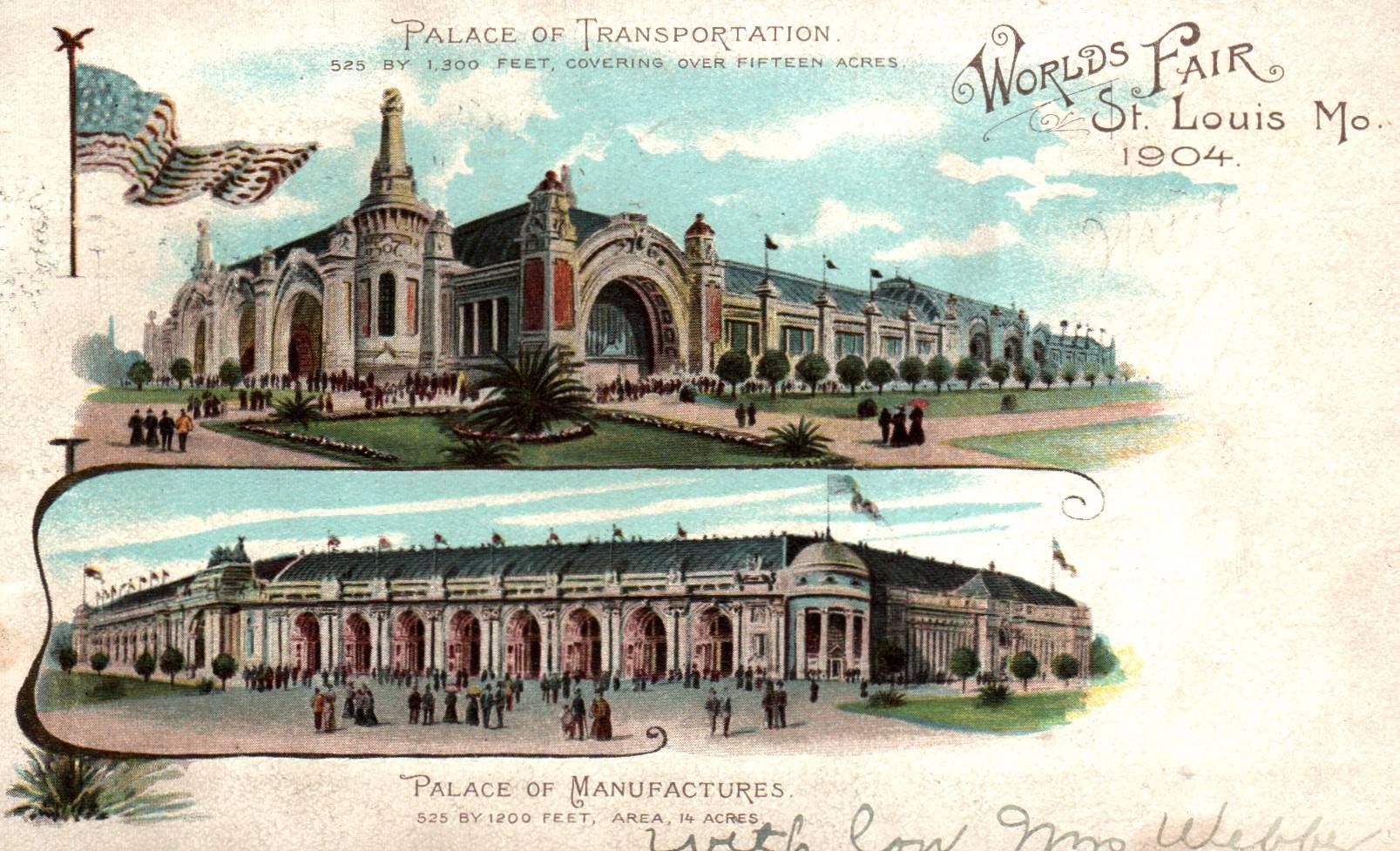
Palace of Transportation and Palace of Manufactures
This page and all the pages on this site may generate affiliate income by displaying advertisements or through links to partners, such as Amazon, Google, or others.
If you’re interested in starting a bird watching journal, there are a few things you’ll want to consider. First, decide on the format you want to use for your journal. Some people like to use a physical notebook, while others prefer to use a digital app or program. Whichever you choose, make sure it’s something you’ll be able to easily access and update regularly.
Next, think about the information you want to include in your journal. At a minimum, you’ll want to record the date and location of each bird sighting, as well as the species of bird you saw. You may also want to include other details, such as the bird’s behavior, any notable features, and any notes about the habitat or other animals you observed.
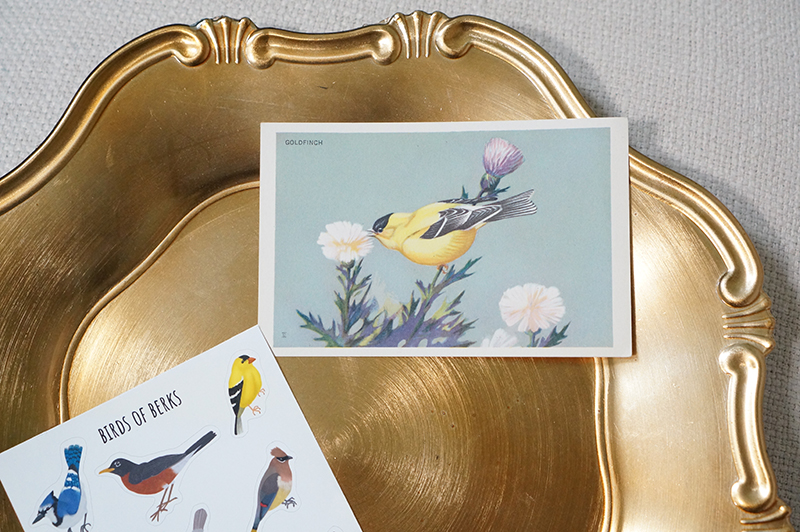
Vintage Postcard of Goldfinch and matching bird sticker.
Finally, consider how you’ll organize your journal. You may want to organize it chronologically, by location, or by bird species. Whatever method you choose, make sure it’s one that makes it easy for you to find and refer back to specific entries.
Overall, starting a bird watching journal is a great way to document your bird watching experiences and improve your knowledge of birds. Happy bird watching!
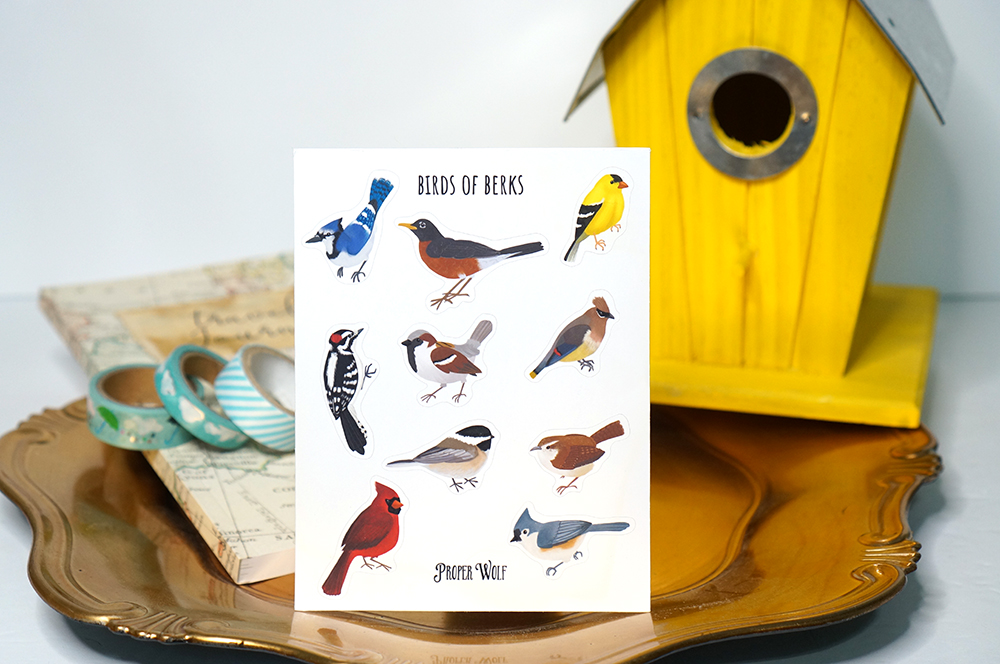
Journal stickers are small decorative stickers that can be used to enhance the appearance of a journal or planner. They are typically made of paper or vinyl and come in a variety of colors, shapes, and designs. Journal stickers can be used to mark important dates, highlight important information, or simply add a personal touch to your journal.
There are many different types of journal stickers available, so you can choose the ones that best suit your personal style and needs. Some common types of journal stickers include monthly calendars, to-do lists, quotes, and decorative borders. Many people like to use stickers that match the theme or color scheme of their journal, while others prefer stickers with a more eclectic mix of designs.
To use journal stickers, simply peel them off the backing and stick them onto the pages of your journal or planner. Some stickers are repositionable, so you can move them around or remove them without damaging your journal. Other stickers are more permanent and should be placed carefully to avoid tearing the pages.
Overall, journal stickers can be a fun and creative way to add personality and organization to your journal or planner. They can help you stay on track and make your journal more enjoyable to use.
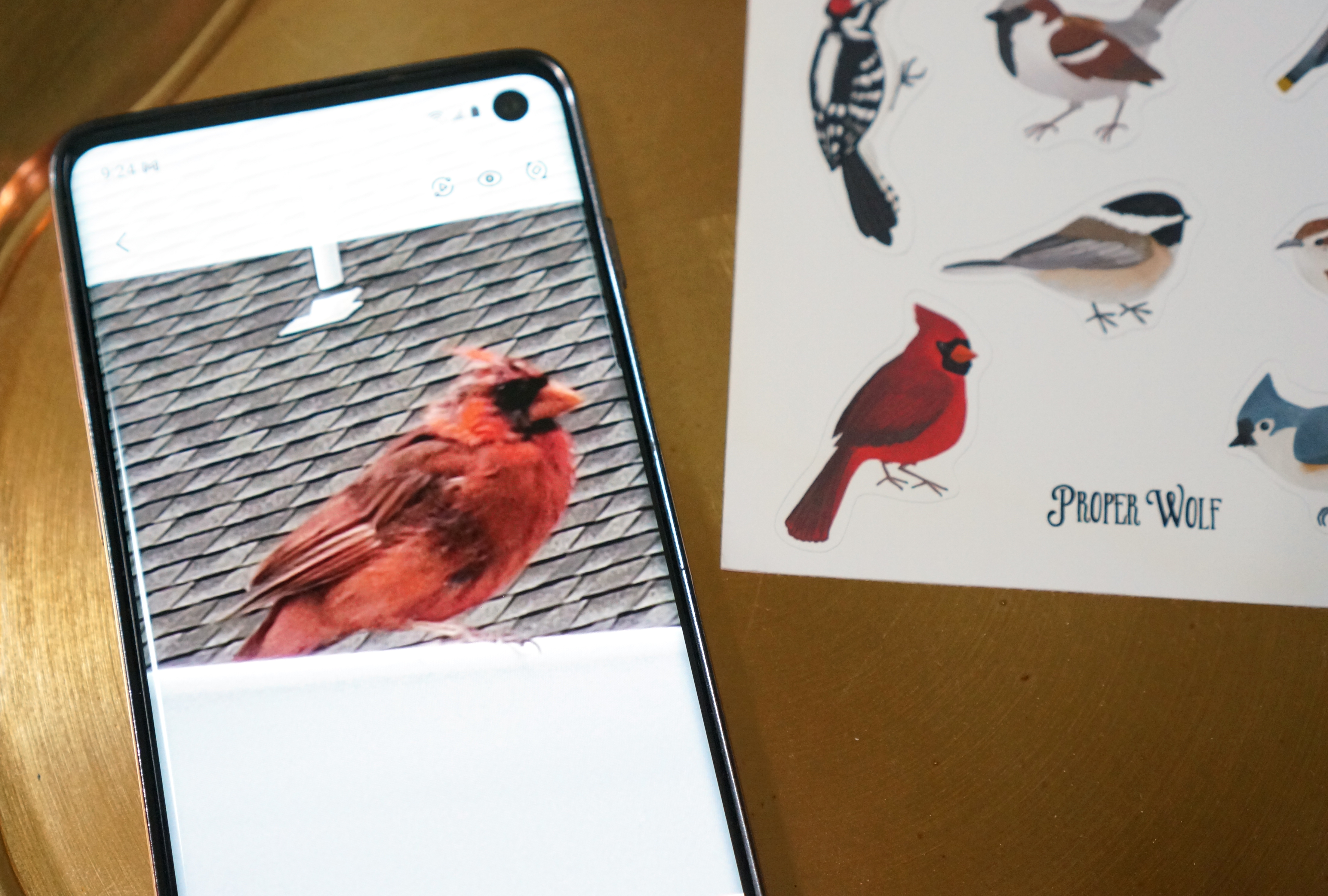
Northern Cardinal photo on my cell phone next to the sticker from
The Northern Cardinal, also known as the red cardinal or common cardinal, is a type of bird that is native to North America. It is a popular bird among birdwatchers and backyard birdwatchers due to its vibrant red plumage and distinctive crest on its head. The male Northern Cardinal is mostly bright red, with a black face and a red bill. The female is a duller red-brown color, with red highlights on her wings, tail, and crest. Both males and females have a sharp, distinctive song that is often used to defend their territories. They can be found in a variety of habitats, including forests, woodlands, and gardens.
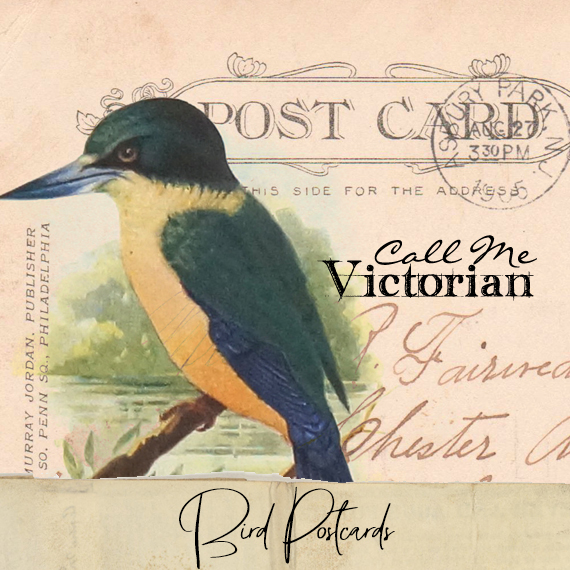
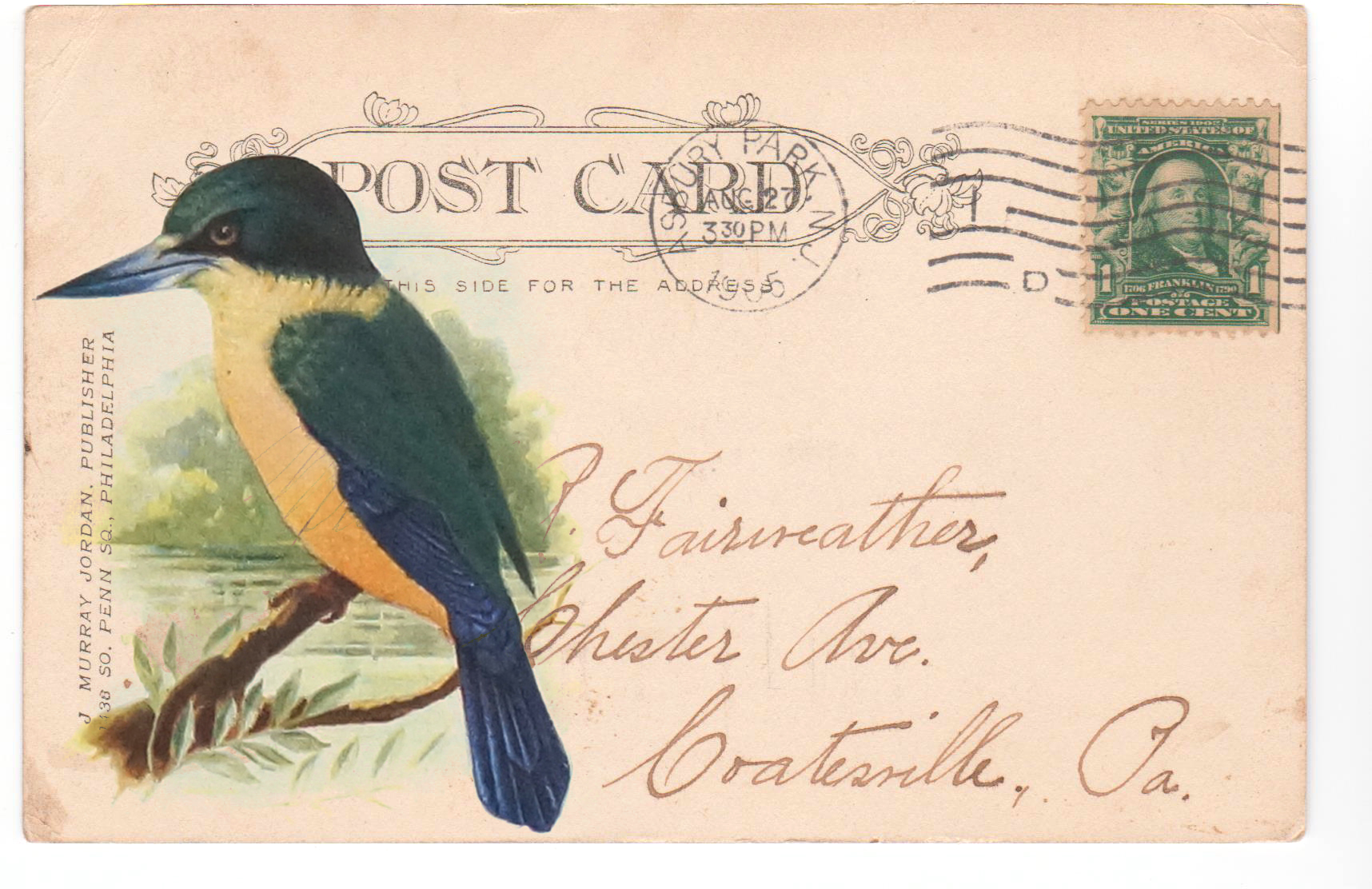
These beautiful vintage bird illustrations are layered onto vintage early 1900’s postcard backs to create this free printable from CallmeVictorian.com
You will be able to print out onto paper or cardstock and cut out the postcards for your scrapbook layouts or junk journals. The birds included on the cards are a New Zealand bird called the Pied Fantail with a pretty gold and green coloring. The Kingfisher who uses its beak to dig holes and nest in tree hollows and has a blue, yellow and green color. Male and female Ruia which eat berries and have long tail feathers. Use the button below to open and print or save the file from Google Docs.